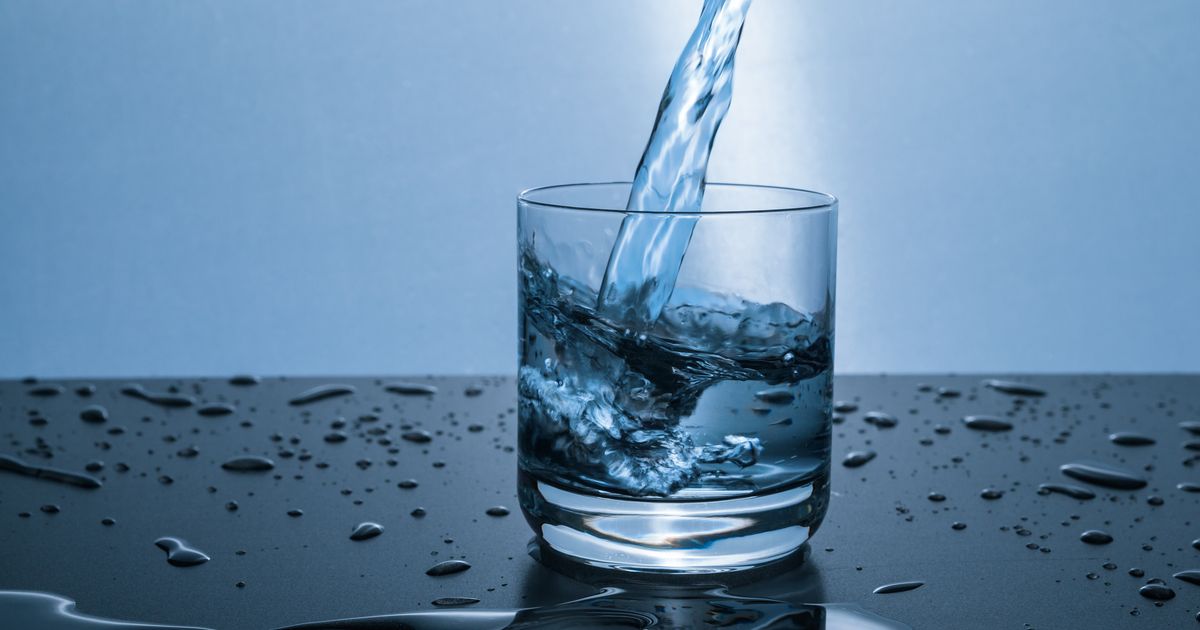
Why Your Tap Water Feels 'Heavy' and How to Fix It
Your tap water can feel heavy when it carries excess hardness minerals, dissolved salts, or has lost its natural structure. Learn how filtration, softening, and vortex flow restoration can transform dead tap water into something genuinely alive.
Your tap water can feel heavy when it carries excess hardness minerals, dissolved salts, chlorine byproducts, sediments, or simply when it has lost the fresh, lively character many people notice in well-structured water. Practically, to address the problem is something that requires you to identify what is actually in the water, then use the right combination of filtration, softening, and flow improvement rather than treating every water issue the same way.
Water can feel heavy or flat when dissolved calcium and magnesium make it taste harder, chalkier, or more resistant on the palate. Elevated sodium after softening can also create a slippery or unusual mouthfeel, which some people interpret as “heavy” in a different sense. In many homes, taste and texture are also affected by aging pipes, residual disinfectants, and stagnant water in the system.
What usually helps
The first step is to test the water so you know whether the main issue is hardness, chlorine, sediment, or something else. For drinking water, a good carbon filter can improve taste and remove chemical compounds affecting the taste, while a whole-house softener can address hardness across the home. If the water is otherwise safe to drink but just feels flat, your water might be “dead” energetically.
Municipal water arrives at your tap having traveled miles through different pipes under high pressure — a journey that couldn’t be further from the spiraling, meandering path water follows in nature. That difference isn’t cosmetic. It’s structural.
In nature, water moves through rivers and streams in continuous spiral patterns, self-organizing as it flows. This motion gives water its natural crystalline structure — a coherent molecular arrangement that Viktor Schauberger described as water’s living state. As he observed, “The vortex is the natural movement of water to self-cleanse and energize; mimicking this restores the water’s natural crystalline structure.” Municipal processing and pressurized straight-pipe delivery strip away that organization entirely.
‘Dead’ water is water that has lost its crystalline structure — it’s chemically treated, mechanically forced, and molecularly disordered by the time it reaches your home.
So what is structured water, exactly? It’s water that has been restored to the coherent, energized state it holds in natural springs and mountain streams. It’s water whose molecular organization, flow pattern, and energetic state are considered more coherent than ordinary, stagnant water. Water is not only a chemical substance, but also a dynamic medium that responds to motion, temperature, geometry, and its surrounding environment. When water is allowed to move in natural patterns such as spirals or vortices, it is often described as becoming more ordered and more “alive”.
The remedy for ‘dead’ tap water is what practitioners of holistic water science call Natural Action: restoring spiral movement to water so it can reorganize itself the way nature intended.
This is why structured water is commonly linked to ideas of vitality, improved hydration, and a more harmonious interaction with the body. From a Water Heart perspective, structured water is about restoring a more natural water quality, not just filtering out impurities. It is water that feels fresher, flows more naturally, and is better aligned with the patterns found in nature. For many people, the concept bridges engineering, biology, and a more holistic understanding of wellness.
In practice, you notice the difference immediately. Structured water tends to feel softer on the skin, less flat on the palate, and more satisfying to drink. Understanding why those sensory shifts happen means looking closely at the physics of vortex movement — and what it actually does to water at the molecular level.
How Vortexing Creates Structured Water
Vortexing restructures water through physical implosion — not chemistry, magnets, or filtration — by mimicking the spiral dynamics water uses in nature to restore its energetic coherence.
When water enters The Heart it’s forced into a precisely calculated spiral path. That inward-spiraling movement generates centripetal force, the same implosion dynamic Viktor Schauberger observed in mountain streams. Pressure at the center drops, molecular chaos reduces, and water molecules begin reorganizing into more coherent, hexagonally ordered clusters.
This transition moves water from its ordinary bulk state toward what researchers describe as the “fourth phase” — a denser, more structured arrangement sometimes called EZ (exclusion zone) water. Structured water exhibits lower surface tension compared to standard tap water, which supports faster cellular absorption according to research published by Dr. Gerald Pollack. Lower surface tension isn’t a chemical change — it’s a geometric one.
Vortex structuring is a physical, not chemical, transformation. No minerals are added or removed. No electricity is consumed. The flow path does the work.
Magnetic-only approaches share some intent but miss the critical mechanism. Magnets alter ionic charge without inducing the spiral movement that drives genuine restructuring.
The Daily Experience: What Structured Water Feels Like
Structured water doesn’t announce itself through a label — it announces itself through sensation, from the first glass of water in the morning to a relaxing shower in the evening.
Skin and hair respond almost immediately. Vortexed water carries lower surface tension, which allows it to interact with skin more intimately rather than sitting on top of it. The result is a noticeably silkier feel in the shower — hair that rinses cleaner, skin that feels less tight after washing, without any change to your existing plumbing or products.
Drinking experience shifts in a quieter but equally telling way. According to Dr. Pollack, lower surface tension allows water to permeate cell membranes more efficiently, which reduces the heavy, sloshing sensation some people notice after drinking a full glass. The water feels lighter going down — genuinely refreshing rather than filling.
Taste and aroma change too. Many people describe structured water as smoother and rounder, with the sharp, chemical edge of chlorine noticeably softened.
Holistically, structured water purifies your body and structure. The body is made of approximately 70% water, and by drinking structured water, showering in structured water, the body is charged with the very energy of life. The same energy that recharges your body when doing yoga, immersing yourself in a forest or going for a swim in a mountain stream.
Structured Water for Plants: Why Your Garden Craves the Spiral of Life
Structured water for plants is about giving your garden water that behaves more like spring rain and less like tired tap water pushed through straight pipes. It is water that has been moved, cooled, and organized in ways that make it more bioavailable to roots, soil life, and the subtle processes that drive plant vitality.
When water flows through a vortex, its movement becomes spiral and centripetal rather than chaotic or purely linear. Several vortex-based agricultural systems report that this spiral motion breaks up large mineral clusters, increases dissolved oxygen, and improves the wetting and penetration of water into soil. In practical trials, vortex-treated water has been associated with higher germination rates, stronger root systems, and measurable increases in plant mass and crop yield, with some studies reporting growth improvements in the tens of percent range compared to untreated irrigation water. This suggests that the way water is moved before it reaches your plants can change how effectively it delivers nutrients, oxygen, and hydration.
From a biophysical perspective, structured water is often described as having more ordered molecular clustering and a stronger negative charge, similar to the “fourth phase of water” discussed in research on H3O2-type structures. In agriculture, this translates into water that behaves more like fresh rainwater — energetic, easy for plants to absorb, and supportive of microbial activity in the soil. Field data from structured-water irrigation systems show that crops can achieve comparable or better growth with 10–30% less water, indicating that the quality and structure of the water can compensate for quantity. For gardeners, this means that the spiral of life is not just a poetic image, but a practical tool: by reintroducing vortex motion and natural structuring, you help your plants drink more deeply, grow more resiliently, and express more of their inherent vitality.
Protecting Your Home: The End of Hard Scale Buildup
Vortexing devices approach limescale not by stripping minerals out of the water, but by changing how those minerals behave so they are less able to stick and form hard deposits. In technical terms, they act more like physical conditioners than like chemical softeners, using motion, turbulence, and oscillation to alter crystal form and solubility.
When hard water passes through a vortex device, like The Heart, the flow spirals and is highly mixed, exposing dissolved calcium carbonate to changing pressure and shear conditions. Several industrial and domestic vortex systems report that this treatment converts “sticky” calcite crystals into softer, more rounded aragonite particles that stay suspended and rinse away with the flow instead of cementing onto surfaces. This change in mineral behavior leads to visibly reduced limescale on shower glass, taps, and heating elements, even in regions with very hard water. In industrial contexts, similar devices are used to keep heat exchangers, cooling towers, and pipework cleaner by preventing scale from forming in the first place rather than dissolving it reactively with chemicals.
From an engineering standpoint, limescale is essentially precipitated calcium carbonate that forms when temperature, concentration, and flow conditions push hard water past saturation. Vortexing and oscillation treatments work by increasing the solubility of these particles, improving mixing at the pipe wall, and changing the way crystals nucleate and grow. Instead of forming dense, adherent crusts, the particles remain more finely divided and mobile, which makes them much easier to flush out during normal usage or routine cleaning. Studies and field data from non-chemical scale-control technologies show that such physical methods can significantly reduce scale thickness, maintain heat-transfer efficiency, and lower maintenance frequency compared with untreated hard water, although results depend on water chemistry and system design.
The Heart, thereby helps water in your home or business carry its minerals in a more harmonious, non-encrusting way. The minerals are still present, but their structure and interaction with surfaces change, which means less chalky buildup in pipes, boilers, and household appliances and a gentler feel on skin and fixtures.
Why Structure Matters as Much As Purity
Water’s structure is as important as its chemistry — and restoring that structure is the key to returning tap water from a depleted, pressurized state to something genuinely alive.
Most conversations about water quality focus on what’s been removed: chlorine, heavy metals, contaminants. But Viktor Schauberger’s foundational insight, confirmed by decades of observation, is that water loses its vitality when forced through straight pipes under pressure — regardless of how chemically clean it tests. Purity alone doesn’t restore movement. Movement restores vitality.
Re-vitalisation by vortex flow is a passive and effective correction. It requires no electricity, no filter replacements, no maintenance schedule. The spiral geometry built into a device like The Heart works continuously at the water’s point of entry into your property, restructuring every liter that flows through your home and life.
The benefits are cumulative across every point of use: better cellular hydration, reduced limescale on appliances, improved uptake in the garden. These aren’t separate outcomes — they’re expressions of the same underlying principle: water behaving the way nature designed it to behave.
Structured water is living water. The philosophy isn’t abstract — it’s holistic engineering. And understanding that distinction is precisely what opens the door to choosing the right solution for your home. Find The Heart on our website, or contact us for help with a water filtration system for your home.